### The Paper Before the Records
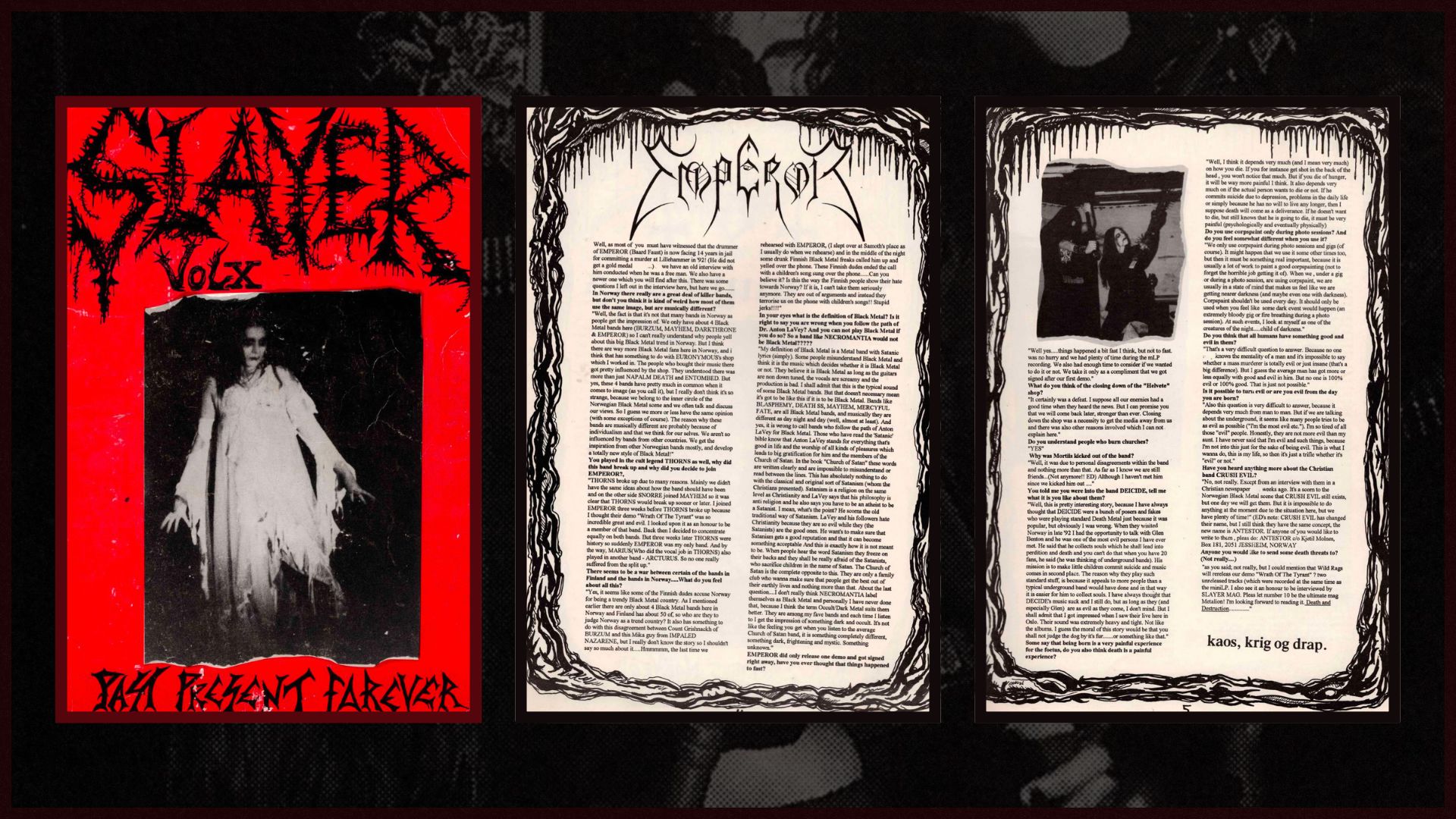
Before the second wave had a name, Norway had a paper trail, and it was loud, cheap and stubborn. Take SLAYER, the fanzine Metalion put together in Oslo. On its credits page it says: "Spawned to earth in February 1985. Created and established by METALION!" No budget, no office, no plan beyond making it. Inside the same issue he tells how he met Euronymous that year at a MOTÖRHEAD gig in Oslo while selling SLAYER 2 out of a bag, and how an article on MAYHEM in SLAYER 3/4 is what connected the band to the underground. A zine, a concert, a stack of copies. That was the network.
And it fed itself. Turn the pages and there is an ad for HEAD NOT FOUND, the label, saying it without any shame: "One advantage when doing a label and a 'zine is that you can promote your label through the 'zine." The zine sells the label, the label sells the record, the record goes into a parcel, the parcel crosses Europe and lands on a table in Portugal. ULVER "Bergtatt" sits in that same ad, due in February 1995, before anyone I knew had heard a note of it. I never saw Oslo. I saw the ad, and it was enough to make me start digging.
The bands understood this better than anyone. Quorthon of BATHORY, Swedish but read all over the Norwegian scene, told Metal Zone that the early fanzines were "those small Xeroxed 'zines who were made all over Europe in a few hundred copies", mostly wanting an interview, a logo and black and white photos. What he took from it is the part I keep coming back to: people were more interested in the mystery around the band than in how its members looked. A few hundred Xeroxed pages, black toner, faces you couldn't quite make out. The distance did half the work.
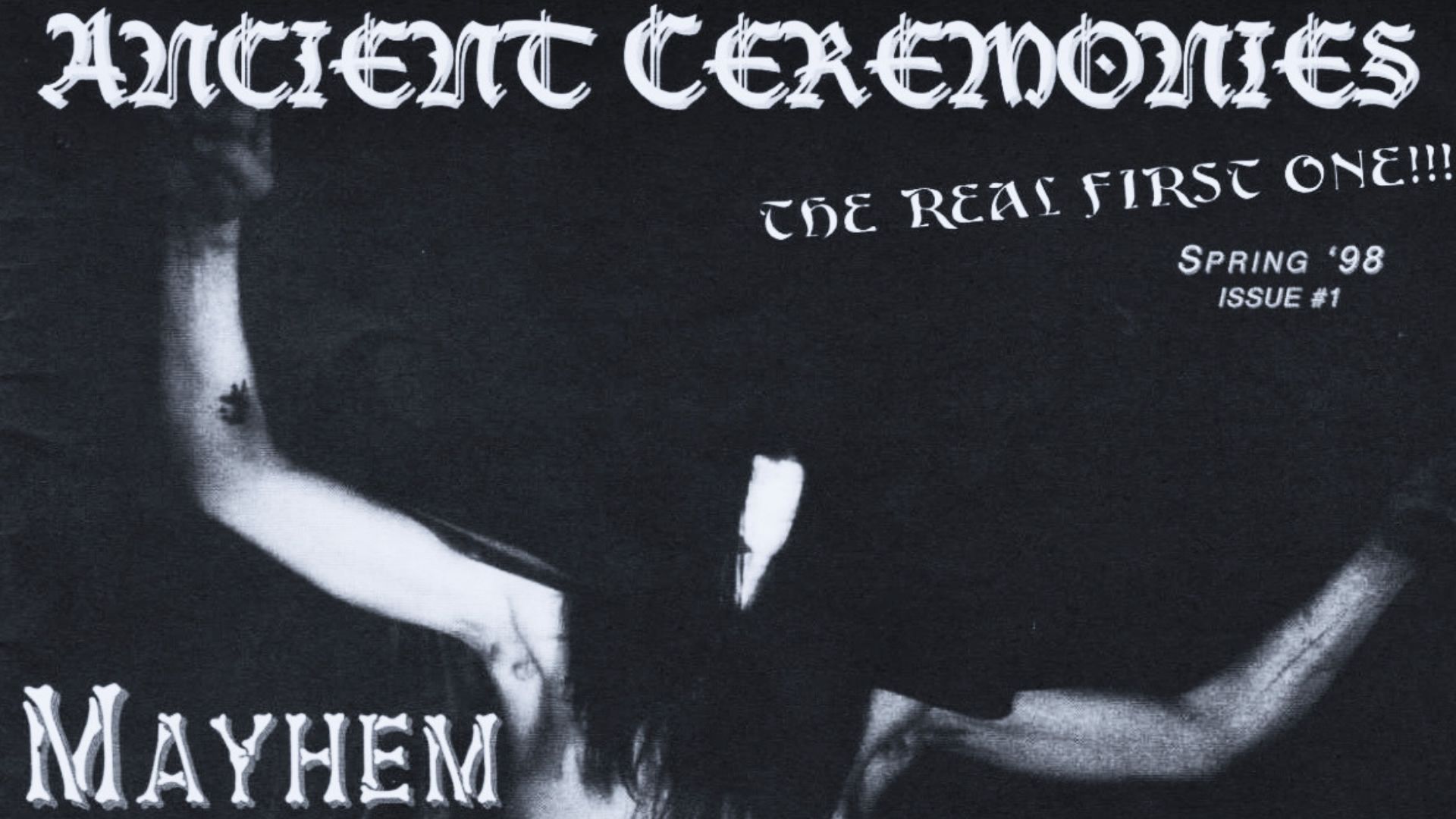
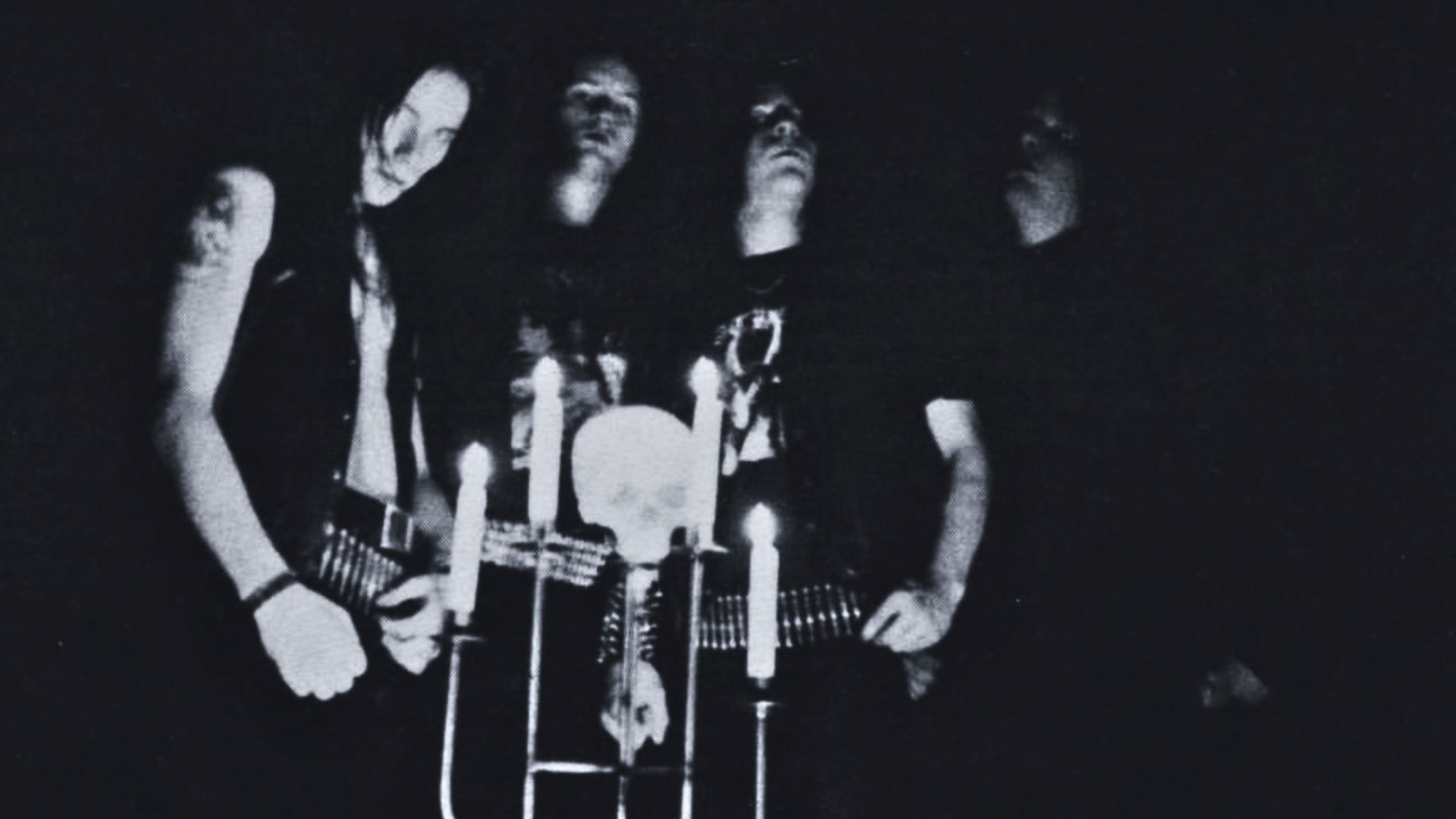
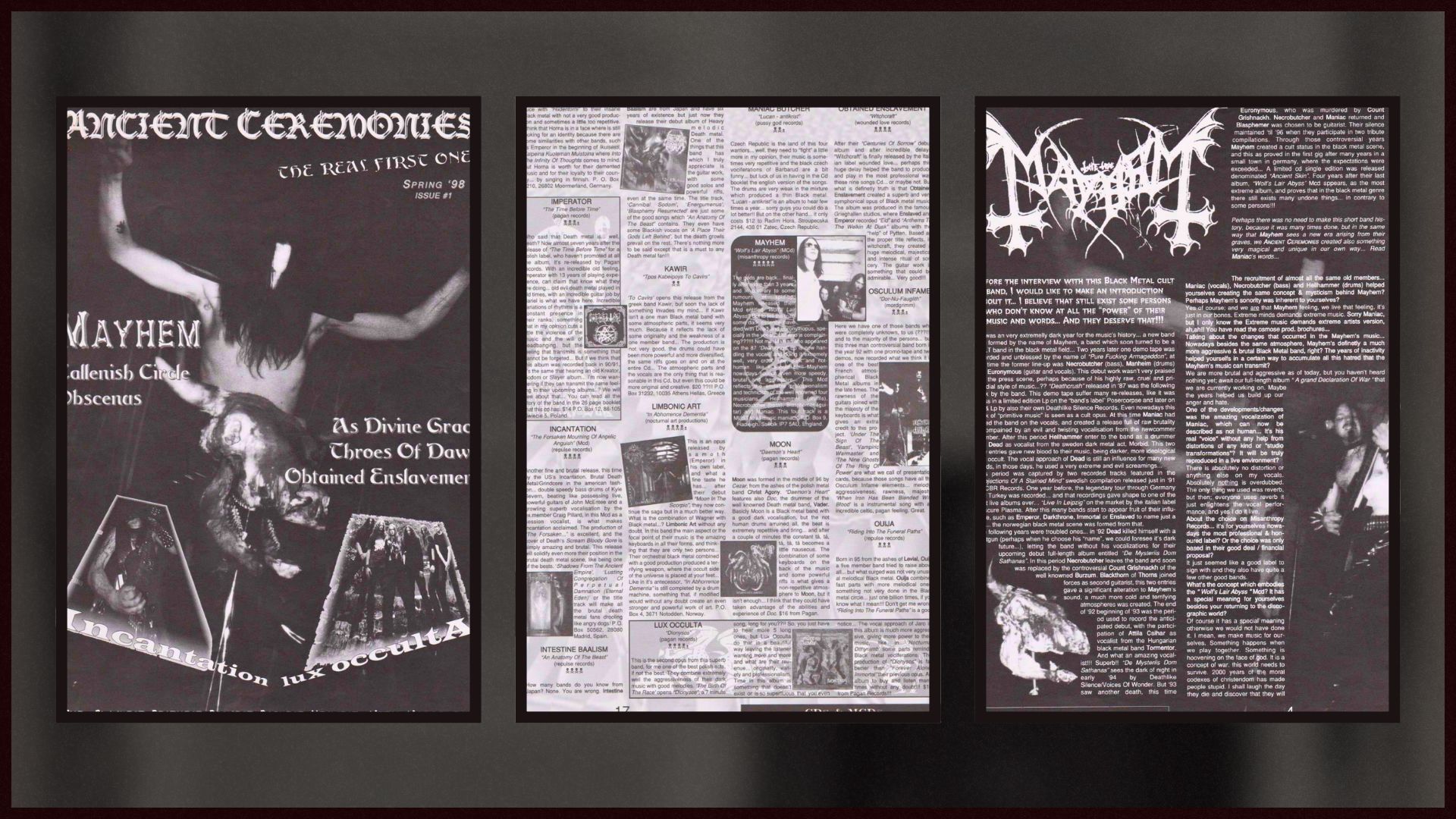
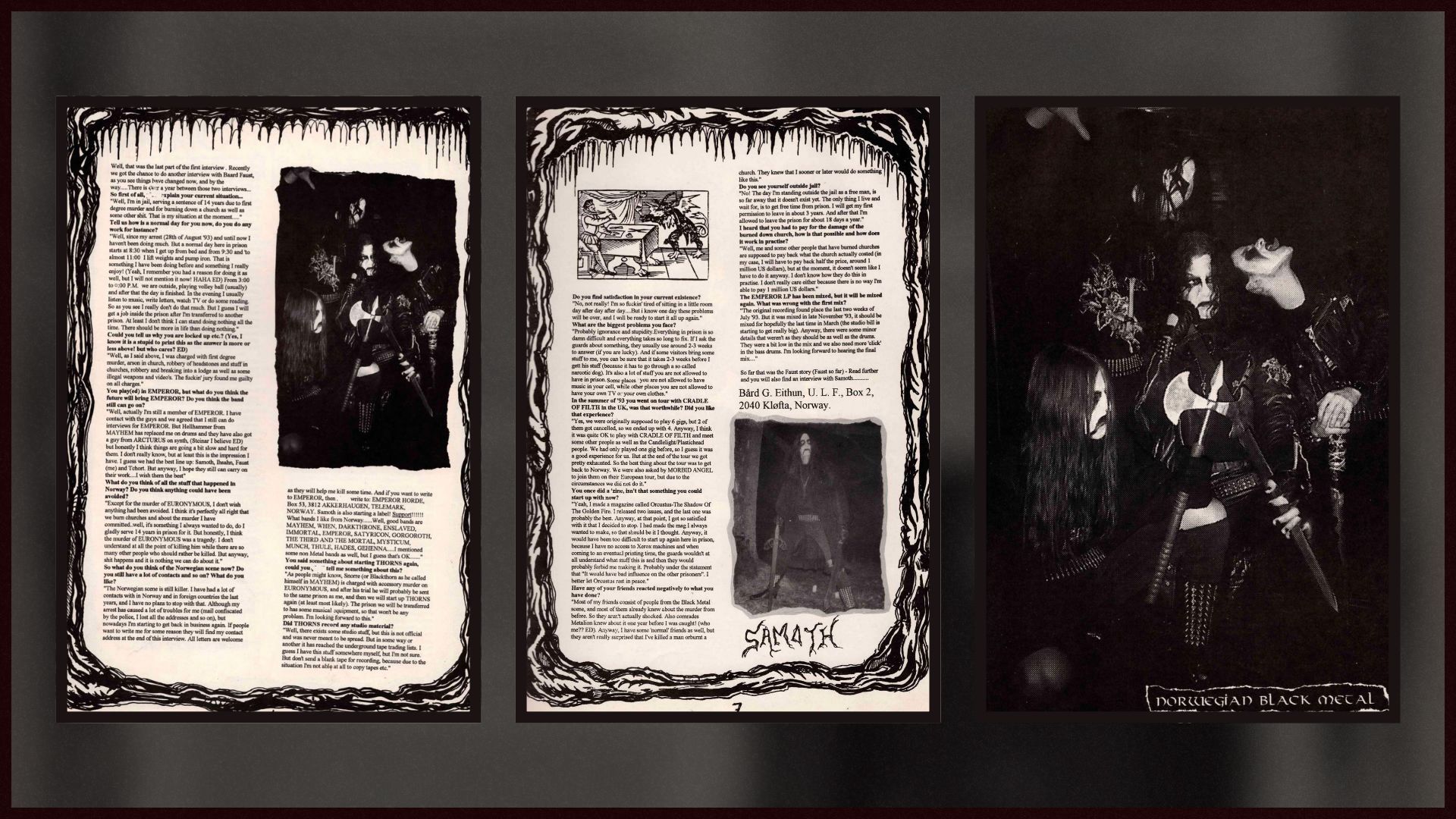
In Portugal, that paper had a name: ANCIENT CEREMONIES, a Portuguese zine that covered Norwegian metal better than most of what crossed the border. I have a big collection of zines, from 1986 to 2002, and very few of them are digitised, so they stay on the shelf, where they belong. Life changed my habits after 2002 and the shelf stopped growing, but I still pull them out. Reading a 1990s interview on the paper it was printed on is a different thing from reading it on a screen. The pages are a bit crooked, the layout is a fight, and the voice of the person talking is still very much alive in it.
### A Shop, a Basement and a Studio in Oslo
Then the paper got a room. MAYHEM's Euronymous ran the HELVETE record shop in Oslo, which also worked as his label DEATHLIKE SILENCE, and in the interviews I've read, Satyr describes it as the place where the people who made this music could find each other. I'm giving you that as his account, not as settled history, but the picture is clear enough: a counter, a few shelves, a basement full of people who had been alone in their towns until then. I run a shop. I know what it's worth when someone walks in who has been waiting years to meet somebody who gets it.
The same pattern repeats everywhere you look. SATYRICON's label MOONFOG started, in Satyr's own words, "around January/February '93", at first "only as a distribution firm, selling t-shirts and demo's". He signed with TATRA Records, and in one interview from the 1990s he rates MOONFOG, TATRA, HEAD NOT FOUND and NOCTURNAL ART well above what he calls "shitty labels". You can take or leave the attitude. The method is what I notice: a band that runs its own distribution, sells shirts to pay for pressing, sends parcels by hand. A label that starts as a mail order list. It's the same logic every small shop has run on since.
The sound needed a house too. Samoth has talked about GRIEGHALLEN, the studio in Bergen where a lot of this music was recorded, and the records you can still hold today are the proof that rooms like that mattered as much as any riff. DARKTHRONE "A Blaze in the Northern Sky". SATYRICON "Dark Medieval Times", which Satyr says was recorded long before the label deal that finally released it, and the date alone tells you how slowly the machinery turned. EMPEROR "In the Nightside Eclipse". ARCTURUS "Aspera Hiems Symfonia". And DIMMU BORGIR's first album, which hit me as a shock and as astonishment at the same time, and I still feel it the same way today. None of this came out of a manager's plan. It came out of people with a four-track, a few hundred copies and a postal address, and a very stubborn idea of what the music should sound like.
### Away From Oslo
It's easy to hear the whole scene as one city, and it wasn't. ENSLAVED came from Haugesund, on the west coast, and Grutle talks about it with a humour that has nothing to do with the grim image people paint of Norway. EMPEROR came from Notodden, a small place where Ihsahn and Samoth built something out of very little, and Ihsahn has spoken about the jobs and the ordinary life he walked away from. A small town in Telemark and a harbour town on the west coast are not the cities on anybody's map of black metal, and they're where a good part of the music was actually written.
That changes how I listen. When "Mother North" starts, I'm not hearing a capital. I'm hearing a long winter in a small place, a rehearsal room, people with too much time and almost no money. When I put on "Aspera Hiems Symfonia", I hear the same thing under all the ambition: someone alone with an idea much bigger than the room he's in. Every cassette that reached me carried that weight, and I felt it before I had any context for it. It was always a small miracle that the thing had made it all the way to me.
### What Stayed When the Noise Moved On
I won't skip the part everyone knows. In 1992 and 1993, churches burned in Norway. A man, Magne Andreassen, was killed in Lillehammer in 1992, and Euronymous was killed in August 1993. People were convicted. Those are facts, and no record ever changes them. I follow no religious ideology, no anti-religious one, and no political one. I've never been a follower of any of it, and I never will be. I take things in, I look at them closely and I make up my own mind. What I follow is the music, and the music will never erase any of it.
What I can tell you, as someone watching from outside, is how fast the mood changed after 1993. Fenriz has said the "second wave" label came along and the press jumped on it around 1994. Satyr, looking back, says the magic went when the internet replaced slow mail. Samoth has said the "Lords of Chaos" book politicised the scene. Three people who were inside, each pointing at the same turn: what had been built by hand, slowly, with stamps and Xerox machines, started to be talked about more than it was made.
That's how it looks from my side of the counter. The noise was loud, so it got the headlines. The work was quiet: the zine, the shop, the label with a mailing list, the studio booked for sixteen hours. And the quiet work is what actually put records in people's hands. Even the big 1993 European tour ran through labels abroad, OSMOSE and SPV, which shows how much the reach still depended on people with offices and parcels. If you want to understand why this music got to Lisbon at all, don't look at the fire. Look at the postage.
I still play these records, ARCTURUS, SATYRICON, EMPEROR, DARKTHRONE, DIMMU BORGIR, and when I want them to sound like they did the first time, I play the cassettes. They belong to a period and they carry what they carry. Death metal and doom from Norway have their own story, and I'll get to them separately.