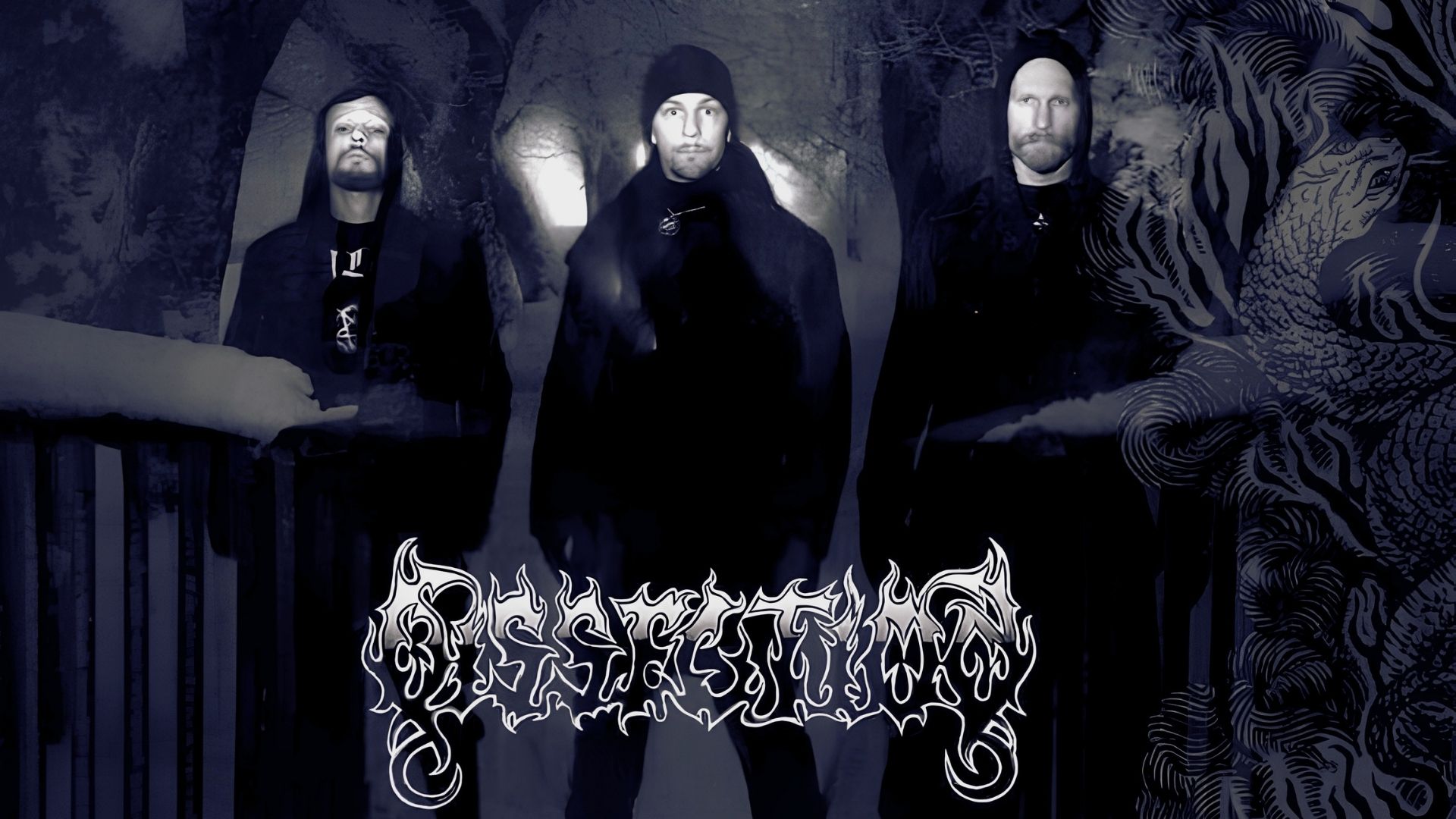
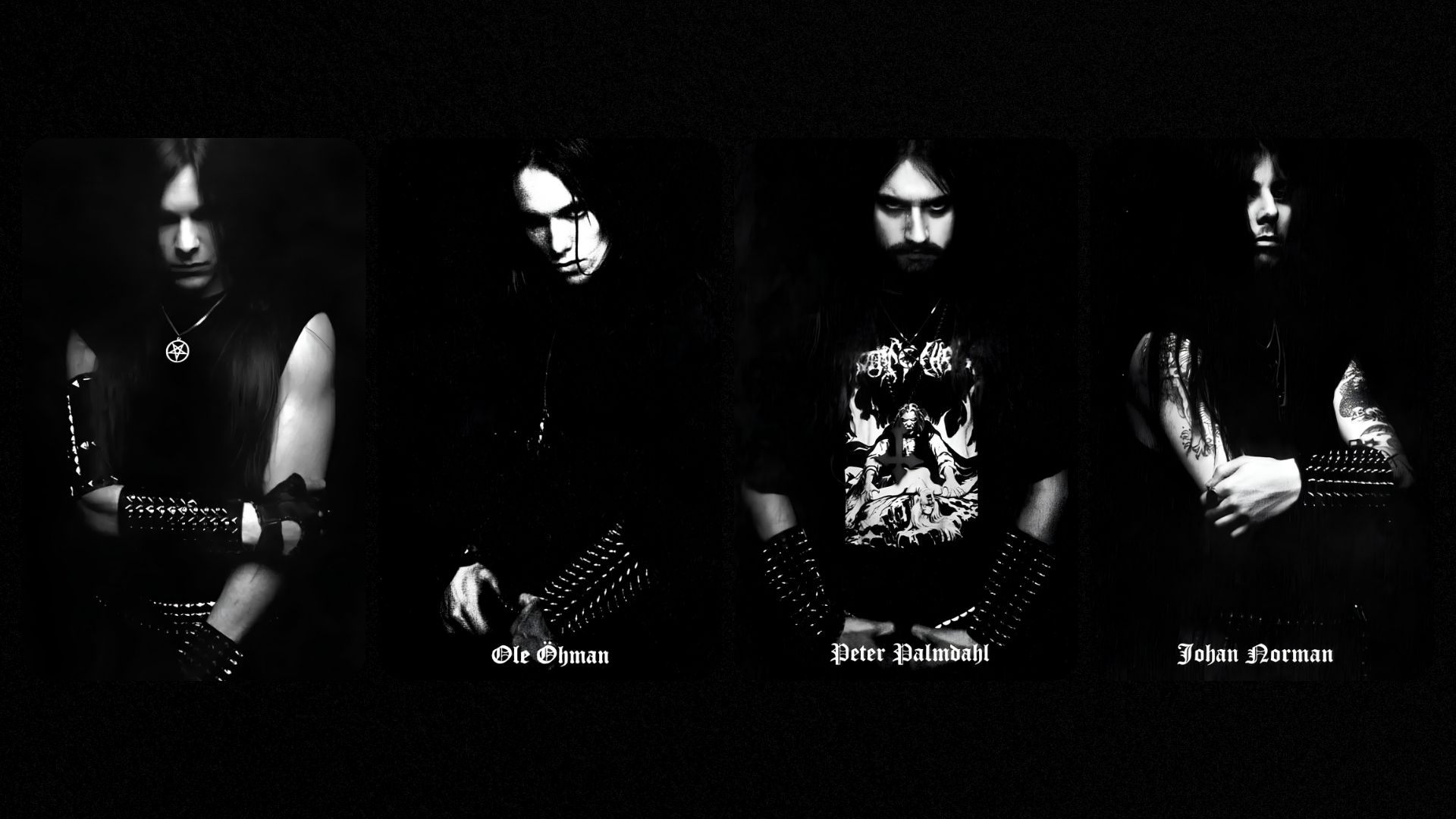
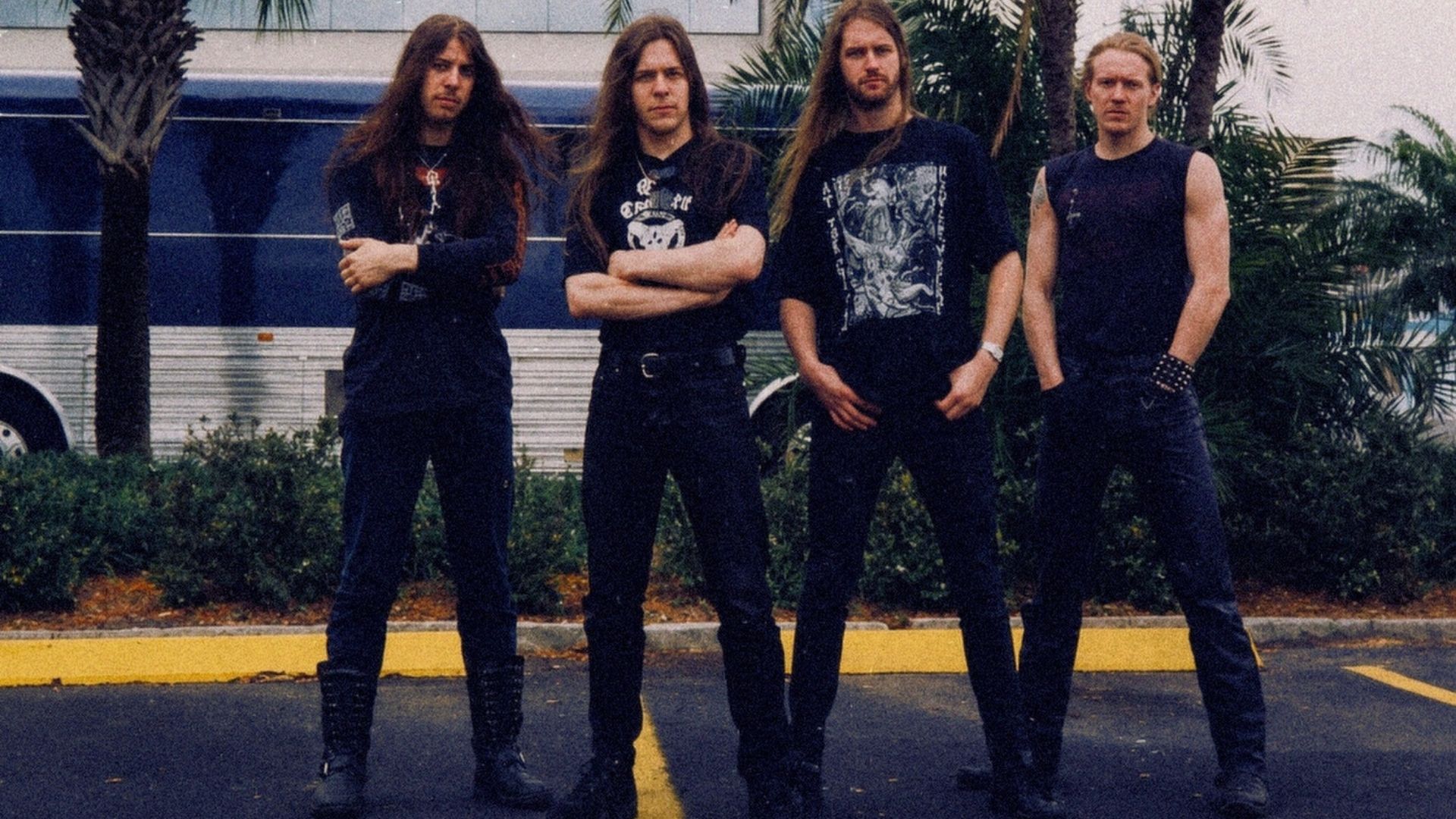
I keep coming back to that image because it is the most honest way into this band. DISSECTION made three albums in thirteen years, and around them is a story that could easily swallow the music: a teenage band in a small Swedish town, a death in Gothenburg, years in prison, a comeback nobody quite knew what to make of, and a last record people still argue about. It is easy to let all that drown out what is actually on the records. I would rather tell it in order, from the start, and keep coming back to the music itself, because that is the reason anyone cared in the first place. For me, “Storm of the Light’s Bane” is the DISSECTION fingerprint. Everything before it leads there, and everything after it gets measured against it.
> KEY FACTS
> - From: Strömstad, Sweden, formed in autumn 1989
> - Core: Jon Nödtveidt (guitar, vocals)
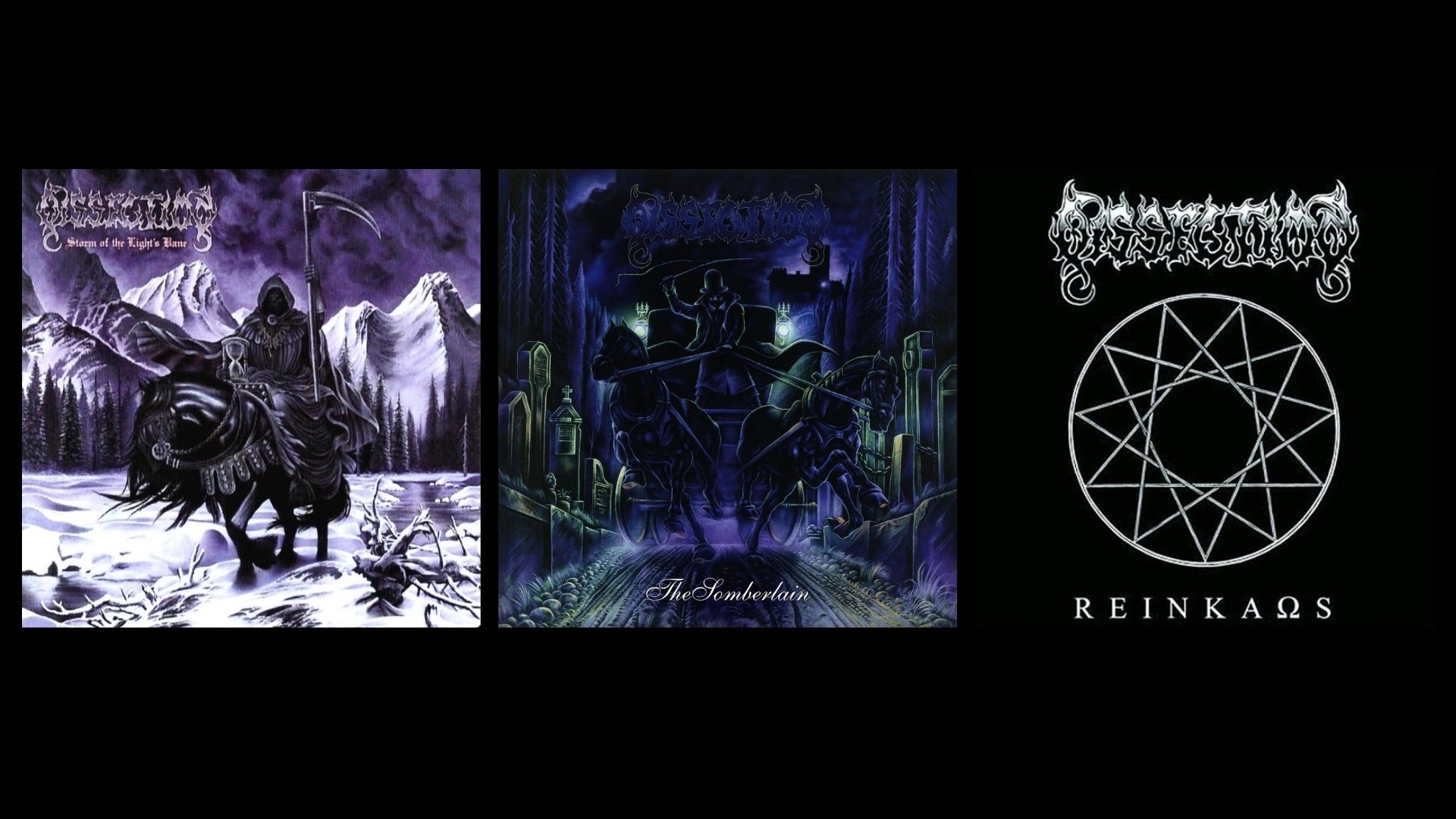
> - Albums: “The Somberlain” (1993), “Storm of the Light’s Bane” (1995), “Reinkaos” (2006)
> - Labels: NO FASHION RECORDS, NUCLEAR BLAST, BLACK HORIZON MUSIC
> - Break: 1997 to 2004
> - End: announced 23 May 2006
### A Youth Centre in Strömstad (1989 to 1992)
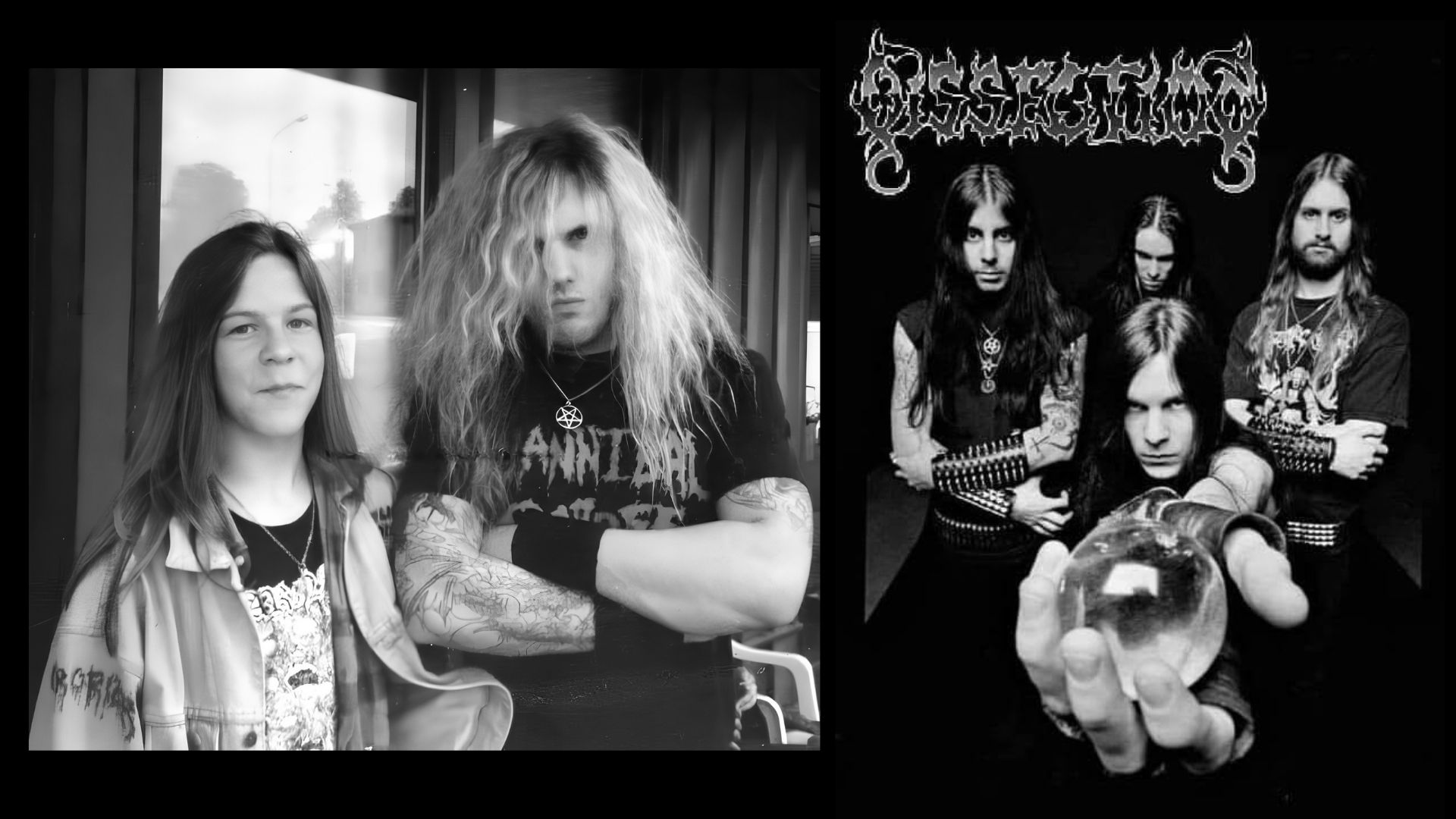
Strömstad is a small town on Sweden’s west coast, close to the Norwegian border. In the autumn of 1989 a teenager named Jon Nödtveidt started a band there with bassist Peter Palmdahl, who had played with him in a thrash outfit called SIREN’S YELL. The drummer arrived a few months later, and how he got there says something about the place. Ole Öhman was about fourteen when he rented the music room at the local youth centre for €1 and sat behind a kit he had no idea how to play. Two members of RABBIT’S CARROT walked in, they jammed, and by the end of the day he was in a band. By spring 1990 he was in DISSECTION.
What they played then was death metal, with deep growls, but a lot of what would come later was already there underneath. The records Nödtveidt named were not the cold Norwegian ones. They were RUNNING WILD, JUDAS PRIEST, MANOWAR, BLACK SABBATH, VENOM, BATHORY, POSSESSED, MORBID ANGEL. In 1995 he told an interviewer that old school metal was “found in our musical roots”, and he meant it as a plain fact. Melody was never an afterthought in DISSECTION. It was the foundation. The speed and the cold came after.
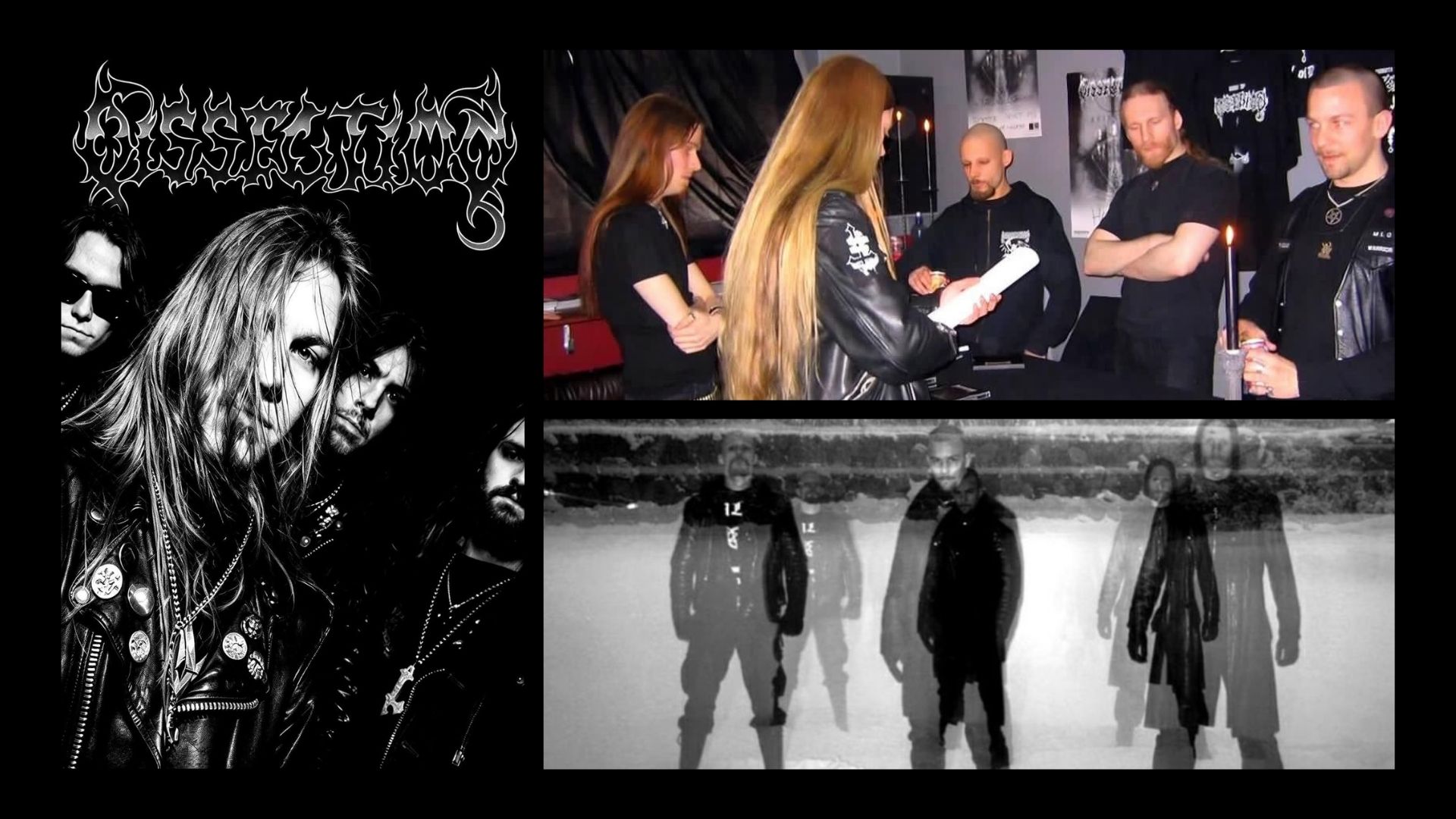
The first releases were small and homemade: a rehearsal tape, “Severed Into Shreds”, sent to fanzines in 1990; a first show supporting ENTOMBED that October; the demo “The Grief Prophecy” in 1991; and a 7" EP, “Into Infinite Obscurity”, pressed in 1,000 copies by CORPSEGRINDER RECORDS. Guitarist John Zwetsloot made his live debut in February 1991 and brought something nobody else in the scene had, a feel for classical guitar. By then Nödtveidt’s name travelled further than the band’s music did. Magnus Olsfelt of THE CROWN remembers hearing about the events he organised in Strömstad before hearing a note, with a rumour that he “sang like a tiger”. Then Euronymous of MAYHEM invited the band to play in Askim, in Norway, where they did “Freezing Moon” for MAYHEM’s late singer Dead. A band from a youth centre was now being talked about in the places that mattered.
---
### Six Days at UNISOUND: “The Somberlain” (1993)
In March 1993 the band went into UNISOUND with Dan Swanö at the desk. They had about a week. Swanö remembers a band that had barely rehearsed and was used to government-funded studios where everything was recorded one instrument at a time, which he refused to do. Drums and two guitars were recorded together, with no click, and later Nödtveidt and Zwetsloot put down two more guitars together, so that “both guys in both ears” got a guitar player. The opening song, “Black Horizons”, was one the others had not heard before Nödtveidt taught it to them in the studio. Swanö added a keyboard solo, a scream and what he calls “monk choirs”. Öhman had a single day for his drums, because the band lived in different cities and met only on weekends. He says he could have played them much better, and that he would still not change the songs. Nödtveidt was seventeen.
You can hear the speed in the recording. The album is rawer and colder than what came after. The bass is almost lost, the drums are loud and metallic, but the writing is already confident: tremolo riffs with melody running straight through them, guitars harmonising like a heavy metal band before dropping into something icy. Zwetsloot’s three acoustic pieces — “Crimson Towers”, “Into Infinite Obscurity”, “Feathers Fell” — break the album into chapters and give it a pause the genre rarely allowed itself.
1.“Black Horizons”
2.“The Somberlain”
3.“Crimson Towers”
4.“A Land Forlorn”
5.“Heaven’s Damnation”
6.“Frozen”
7.“Into Infinite Obscurity”
8.“In the Cold Winds of Nowhere”
9.“The Grief Prophecy / Shadows Over a Lost Kingdom”
10.“Mistress of the Bleeding Sorrow”
11.“Feathers Fell”
[video:https://www.youtube.com/watch?v=FODZv5OAFcg]
NO FASHION RECORDS, home of DARK FUNERAL and MARDUK, released it on 3 December 1993, with a cover by Kristian “Necrolord” Wåhlin. The back of the sleeve is dedicated to Euronymous, who had been killed that August. The album reached No. 57 on the Swedish chart, and it travelled the way these records did then: Mike Sandorf of THE DUSKFALL first heard it on a mix tape that a member of DARK FUNERAL, whose wife worked at the label, sent north to Luleå. It is the only album with the original line-up, and the only one Zwetsloot played on.
---
### The Winter Record: “Storm of the Light’s Bane” (1995)
Between the first album and the second, the band changed shape. Zwetsloot was out after a concert on 14 April 1994, and Johan Norman took over rhythm guitar. By 1995 Öhman had gone too, replaced by Tobias Kellgren, and Alexandra Balogh was brought in to play piano. In March, the band went back to UNISOUND and recorded for two weeks.
Nödtveidt said in a December 1995 interview that “with each record we want to go somewhere with our music where we haven’t been and not try to do the same thing”. “Storm of the Light’s Bane” is where you hear him mean it. The record is tighter, colder, more focused than the debut. The classical-guitar interludes are gone. The drums are simpler and sit inside the music instead of on top of it. The harmonies are sharper. A lot of that came from the next room: DISSECTION shared a rehearsal space in Gothenburg with AT THE GATES, and Öhman says they took “lots of inspiration from early At the Gates, especially with the harmonies”.
1.“At the Fathomless Depths” (1:56)
2.“Night’s Blood” (6:41)
3.“Unhallowed” (7:28)
4.“Where Dead Angels Lie” (5:53)
5.“Retribution – Storm of the Light’s Bane” (4:51)
6.“Thorns of Crimson Death” (8:06)
7.“Soulreaper” (6:56)
8.“No Dreams Breed in Breathless Sleep” (1:26)
[video:https://www.youtube.com/watch?v=xnuvsoaLNlw]
What is on the record is hard to describe without slipping into brochure language, so I will keep it plain. It opens with less than two minutes of cold melody and sparse percussion, then “Night’s Blood” comes in hard. “Unhallowed” is the fastest and meanest here. “Where Dead Angels Lie” is the one everyone knows: a long melodic line, an acoustic break, a scream in the middle that people still quote. “Thorns of Crimson Death” runs eight minutes, brings the main melodies back at the end, then opens into a guitar solo. The album closes on a piano instrumental, a calm that feels like the end of the storm. It runs 43 minutes and plays as a single piece more than a collection of songs. That is why I call it the fingerprint. You do not pick favourites on it so much as lose track of where one song stops.
Öhman, who lived with Nödtveidt at the time, calls most of it “Jon’s baby”, with help from him on the arrangements, and he tells one story I like. Nödtveidt had a tape full of riffs he wanted to throw away. Öhman insisted on listening to it, and one of the discarded riffs became “Thorns of Crimson Death”.
[video:https://www.youtube.com/watch?v=SU6r56QNtsQ]
The sound nearly went another way. Swanö remembers a band deep in the Norwegian scene of the time, wanting everything “necro”, sharper and more evil, while he fought to keep some sonics in. Then Nödtveidt called to ask for a remix, too much reverb on the acoustic guitar in “Where Dead Angels Lie”, the drums not right, the rhythm guitars not right. Parts were re-recorded, and NUCLEAR BLAST did not like the result either. Swanö says there are three mixes in all, and that the last one was finished minutes before the band had to catch a train to Stockholm for mastering. He was running a fever. “The album came out and everyone loved it”, he says.
That is not quite how it happened at the time. NUCLEAR BLAST released the album on 17 November 1995, and the reviews ran from lukewarm to full marks. Öhman says DISSECTION “were never big in the '90s”. That is the most honest thing anyone has said about the band’s reputation. The album did not explode. It stayed on shelves and in tape decks until it became the thing people measured everything else by.
[video:https://www.youtube.com/watch?v=Q-qAwokf9-Y]
---
### On the Road, and the Cracks (1996 to 1997)
The EP “Where Dead Angels Lie” followed in April 1996, and the band toured: the UK with CRADLE OF FILTH, Norway with DARKTHRONE and SATYRICON, and a support slot for MORBID ANGEL in Gothenburg. From the outside it looked like a band on its way up. Inside, it was coming apart slowly. Palmdahl left in the summer of 1997, Nödtveidt’s brother Emil filled in on bass at the festivals, and Norman had disappeared for months. The last show of that run was WACKEN OPEN AIR, which was later released as “Live Legacy”.
### July 1997: Gothenburg
On 22 July 1997, a man named Josef Ben Meddour was killed in a park in Gothenburg. Nödtveidt was arrested in December and convicted in July 1998, together with Vlad Khoshnood. Both belonged to the Misanthropic Luciferian Order, a Satanic order Nödtveidt had joined. He was released in 2004.
I name Ben Meddour because the story of this band goes through his death, and it would be dishonest to tell it any other way. The music and the case do not belong to different worlds. They are connected, and a lot of what came afterwards—the silence, the new line-up, the third album—only makes sense with that in view.
The band was already close to ending. Nödtveidt said later that “we actually broke up unofficially”. There were many opinions inside the band, and he wanted the Satanic side of the concept pushed further than the others did.
### Seven Years Away
For years there was nothing, and in that gap the band got bigger. Öhman says the peak of the fame came while Nödtveidt was in prison and after he came out, because “almost a cult had been forming” and people “had time to listen to the albums”. “Live Legacy”, released in 2003, kept the name in circulation. Inside, Nödtveidt was writing. He says he started on an acoustic guitar and was allowed an electric one some years later, and that he found “a state of fanatic focus … inside the prison walls”. Those songs became “Reinkaos”.
---
### Coming Back (2004)
When he came out, he put together a new band with one rule: he “only wanted Satanists” in it, and the old members were out of the question. Drummer Tomas Asklund answered through the band’s website in early 2004, and Italian guitarist Set Teitan was found in the summer after months of auditions. Erik Danielsson of WATAIN played bass live. Faust, the EMPEROR drummer, had been expected to join, and left, saying the band was turning into a cult with “strict codes”.
The first show was at ARENAN in Stockholm on 30 October 2004, about six weeks after he got out. It sold out, the tour moved to larger venues, and Nödtveidt called it “one of the most surreal experiences in my life”. The Rebirth of Dissection tour played about sixty shows in some twenty countries, plus South America and Mexico. At the INFERNO festival in Norway, the crowd demanded an encore after the venue had cut the PA, so the band played “Elisabeth Bathori” with only amps and drums, and the crowd sang the lyrics. The single “Maha Kali” came out on 10 November 2004 and charted at No. 50 in Sweden. They also started their own label, BLACK HORIZON MUSIC, “out of the need of taking charge of our own business and making things our own way, without compromise”.
### “Reinkaos” and the End (2006)
“Reinkaos” came out on 30 April 2006. It is built on the book “Liber Azerate”, from Nödtveidt’s order, and he called DISSECTION its “sonic propaganda unit”. It runs 43 minutes over eleven tracks.
1.“Nexion 218”
2.“Beyond the Horizon”
3.“Starless Aeon”
4.“Black Dragon”
5.“Dark Mother Divine”
6.“Xeper-i-Set”
7.“Chaosophia”
8.“God of Forbidden Light”
9.“Reinkaos”
10.“Internal Fire”
11.“Maha Kali”
[video:https://www.youtube.com/watch?v=abIBQjFoKzc]
The sound moved again. This is closer to heavy metal and melodic death metal than black metal, with acoustic interludes and almost no blast beats. The audience split from the first week. Some wanted “Storm of the Light’s Bane” part two. Nödtveidt’s answer was blunt: “Our aim has not been to copy ourselves… Those who don’t evolve will perish.” He considered it his best album. On Metal Archives it sits around 71%, against 91% for “Storm of the Light’s Bane”. This is the record that asks the most patience. A fair number of musicians who bounced off it in 2006 say they came round later.
Three weeks after the release, on 23 May 2006, he announced that the band was ending. His statement said: “I have reached the limitations of music as a tool for expressing what I want to express”, and “Dissection’s work is done and this is our legacy”. The last European show was in Stockholm on 24 June, and the dates in Israel and the US were cancelled. On 13 August 2006, Jon Nödtveidt died by suicide. He was 31.
My position is simple: the records and the case are both part of this band’s story. I would rather say both plainly than leave either out or turn either into myth.
---
### What Stayed
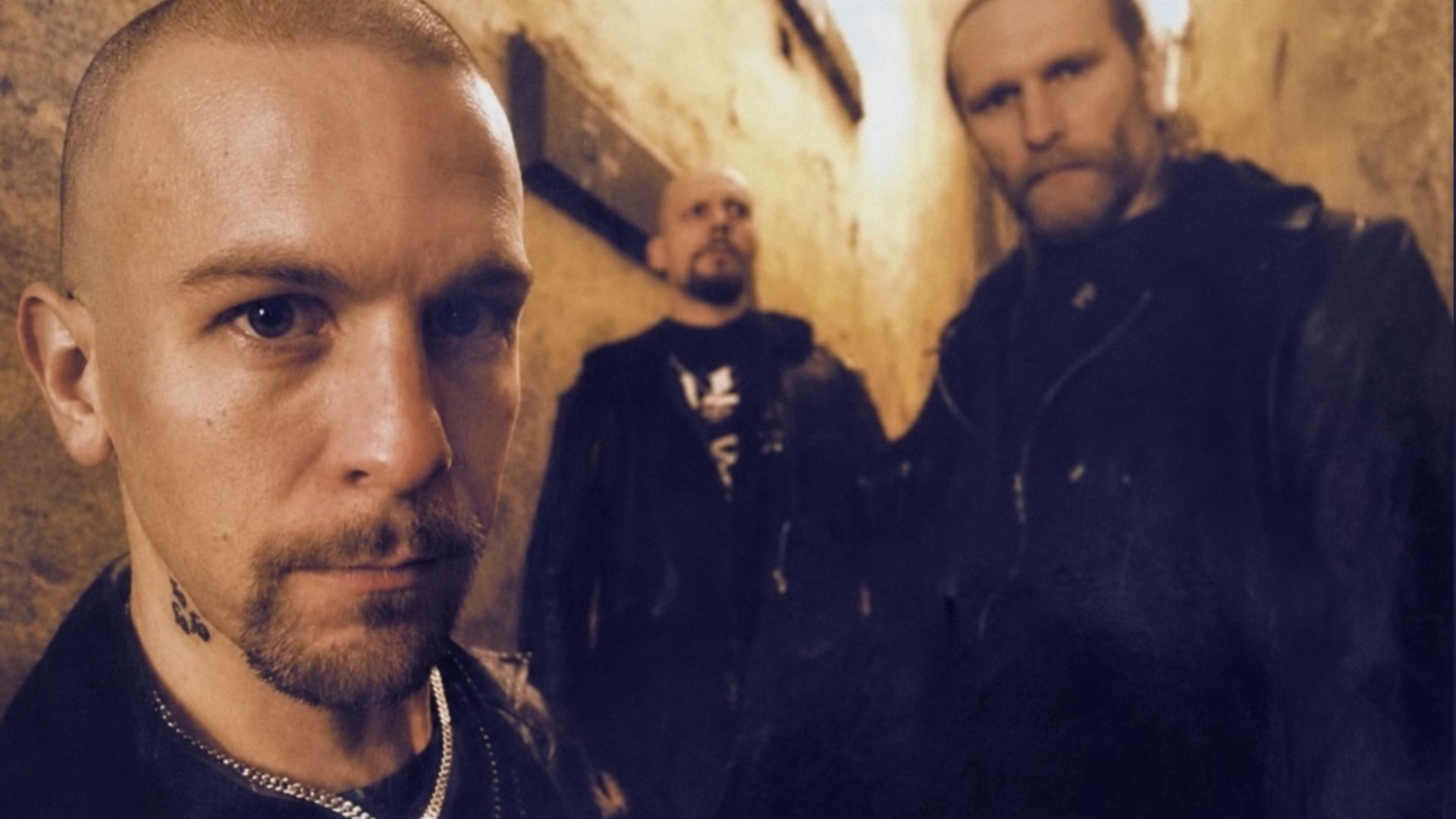
The members went on. Öhman played in OPHTHALAMIA and SWORDMASTER with Emil Nödtveidt, then in DEATHSTARS, and now plays in RÖK. Zwetsloot passed through NIFELHEIM, CARDINAL SIN and THE HAUNTED. Palmdahl played in RUNEMAGICK and DEATHWITCH. Asklund drums for GORGOROTH, Set Teitan played live with WATAIN, and Danielsson fronts WATAIN. Kellgren turned up in 2026 in THE WHISPERING, a band that includes SOILWORK and MEGADETH drummer Dirk Verbeuren. They say hearing “Live Legacy” pulled them in with “the energy and danger searing from the speakers”.
The sound itself spread through bands that took it on directly. THULCANDRA, formed by Steffen Kummerer of OBSCURA, ends its debut with a cover of “The Somberlain”. BANE covered “Where Dead Angels Lie”. STORTREGN, CARDINAL SIN, DEATH TYRANT sit close by. The people who found it first remember exactly how.
> IN THEIR WORDS
> - Patrik Karlsson (ANACHRONAEON): “Dissection showed me that just because the music is extreme, it doesn’t have to be non-melodic.”
> - Jonathan Hultén (TRIBULATION): the first two albums “formed an ideal that laid the foundation” for his musicianship.
> - Jake Superchi (UADA): “Many bands followed the path but there will always only be one Dissection.”
> - Johan Smith (STORTREGN): “we have never considered ourselves as followers of any band”, only that DISSECTION “open new doors” to explore.
Karlsson bought “Storm of the Light’s Bane” at about sixteen because of the cover. Jake Superchi and Norman of SANCTIMONIOUS ORDER both first heard “Night’s Blood” on a NUCLEAR BLAST compilation, “Death… Is Just the Beginning Vol. 3”, in 1995. A friend’s tape did the rest for others. Almost none of them found it first on a screen.
### The Records Today
Most of the catalogue was built after the band was gone. “Live Legacy” came out in 2003 and “The Past Is Alive (The Early Mischief)” gathered the early material. In 2006, THE END RECORDS issued two-disc “Ultimate Reissue” editions of the first two albums, remastered by Håkan Åkesson, with demos, an unreleased 1994 EP and an alternate mix of “Storm of the Light’s Bane”. Vinyl followed in 2013 and 2014, the cassette “I Am the Great Shadow” and two rehearsal recordings in 2021, the live album “Winternoise” and a Swanö-remastered double vinyl of “The Somberlain” in 2022, and in 2026 a seven-LP 20th anniversary box of “Reinkaos”.
> COLLECTOR’S NOTES
> - 1995 European digipak of “Storm of the Light’s Bane”: limited to 500 copies. Unfolded, it forms a cross.
> - 2005 BLACK LODGE “The Somberlain”: 666 copies in a wooden box with a T-shirt and sticker.
> - First “Reinkaos”: 1,001 hand-numbered copies, signed by the band, in an embossed slipcase.
> - 2026 “Reinkaos” box: 666 copies, white and black vinyl.
> - 2014 THE END RECORDS purple vinyl of “Storm of the Light’s Bane”: at the time of writing, 396 owners and 823 wanting it on Discogs, with a median sale price around $217.
I like that the story ends where it started. The rider on the frozen lake is still in the shop window. Somewhere, a kid with no money is still deciding whether to take the chance.
Band Links: [YouTube](https://www.youtube.com/channel/UCdg8RhvnP2ThRIlzxhIddHA)